For most companies, recessions cause a short-term dip in earnings and perhaps even dividends, but recessions are also an opportunity for the strong to take market share from the weak.
That’s because recessions cause more damage to weak companies, with many of them failing during the recession or shortly after, at which point their customers switch to a stronger competitor.
Fashion brands and retailers are very economically sensitive, so Next, BHS, Debenhams, Topman and Topshop have all been good examples of this dynamic over the last decade or so.
On the one hand, Next (which is in my personal portfolio and the UK Dividend Stocks Portfolio) is an example of an exceptionally well-run business, combining a robust balance sheet with a long-term outlook focused on adapting to a changing world. This combination of robustness and adaptability has helped Next sail through recent recessions and downturns while successfully transitioning from a leading store-based retailer to a leading online retailer.
On the other hand, BHS, Debenhams, Topman and Topshop all suffered from owners that were interested in extracting as much cash as possible as quickly as possible, and in the process these companies were saddled with huge debts, demotivated staff and outdated infrastructure.
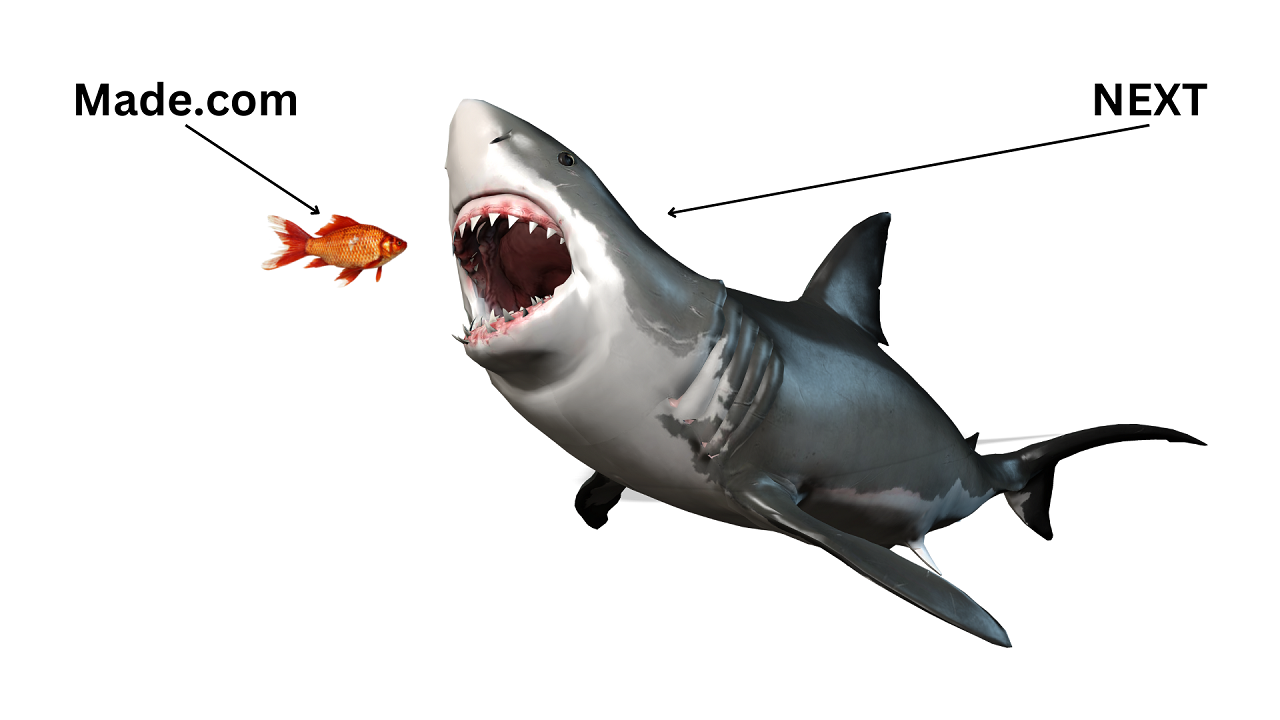
Each of these poorly-run businesses has struggled since the 2008-2009 financial crisis and the pandemic finished them off. Their failure benefitted Next as it was able to hoover up customers who had been let down by these underinvested and unsatisfactory businesses.
A similar story played out in November with the demise of Made.com, a once-leading homewares retailer.
Made.com was valued at £775 million in mid-2021, but strategic errors during the pandemic led to its collapse in November. Shortly after Made.com went bust, Next hoovered up the brand for £3.4 million and will probably hoover up many of its customers as well.
As one somewhat unsavoury saying puts it: The weak are meat and the strong do eat.
No time for spreadsheets or annual reports?
If you like this article but don’t have hours each month to dig through company accounts, you might find my monthly investment newsletter useful.
Once a month I send out a plain‑English PDF showing:
- The full UK dividend stocks model portfolio
- Which shares I’m buying, selling, trimming or topping up
- The latest news and trading updates for each holding
- Where we are in the stock market valuation cycle
All designed so a UK investor can stay on top of their dividend portfolio in well under an hour a month.
Get the latest blog posts & a free checklist
Get my latest articles in (at most) one email per week and download my dividend investing checklist. Topics usually include:
- Detailed reviews of high-quality UK dividend stocks
- Updates on my UK dividend stocks portfolio
- FTSE 100 and FTSE 250 valuations
- "How to" articles covering all aspects of dividend investing
No spam. Unsubscribe anytime.